
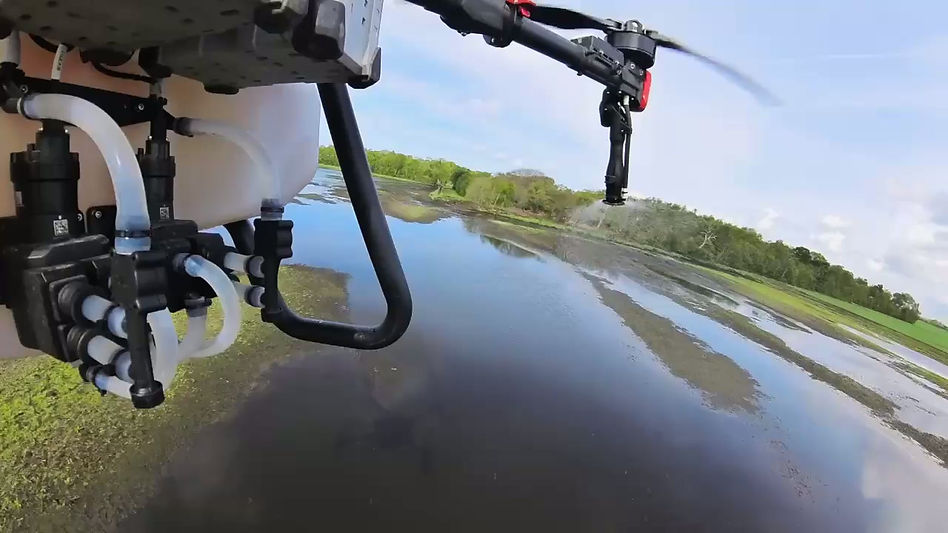
Paludiculture + Typha Planting
Paludiculture involves the sustainable cultivation of wet or restored peatlands, enabling productive land use while preserving the essential ecological functions of peat soils. Among the most promising wetland crops is Typha, which is being developed for use in biomass production, natural fibres, and sustainable construction materials as part of emerging wetland farming systems.
Common applications
-
Typha seed + Wetland crops
Aerial seeding and planting – We can distribute Typha seed, reed species, (Cattail/Reedmace) or other wetland adapted species across large rewetted or peatland areas quickly and evenly.
-
Fertilising
Targeted fertiliser and nutrient application – Precision drone spraying allows nutrients to be applied only where needed, reducing waste and minimising runoff into sensitive wetland ecosystems.
-
Wetland Restoration
Wetland restoration support – Our drones are ideally suited for peatland restoration projects. Reseeding native species, stabilising bare areas, and supporting habitat regeneration.
-
Biomass Crop Management
For emerging paludiculture crops grown for fibre, insulation, biomass, or bio-based materials, our drone can support ongoing crop management with minimal environmental impact. As typha seed is very light, we can arrange for a Gel mix or pelletisation to ensure predictable flight and distribution.
Limited Access on Rewetted Sites
Zero-Contact Delivery: Distributes seed or planting inputs across waterlogged ground where machinery cannot travel.
Inconsistent Establishment
Zero Compaction: Supports soil health by establishing cover without the structural damage caused by late-season trafficking.
Environmental Challenges
Peat Protection: Assists the transition from drainage-based farming to sustainable, rewetted land use.
Complex Project Balance
Low-Impact Strategy: Supports productive land use while simultaneously protecting peat, water, and biodiversity.
Agricultural drones are becoming increasingly valuable in paludiculture systems because wet peatlands are often inaccessible to conventional machinery. Using drones reduces soil disturbance, avoids rutting and compaction, and allows operators to work efficiently in rewetted environments. Typha is a primary crop for UK paludiculture trials. Its success depends on precise water management and establishment - areas where drone-based delivery provides a scalable, low-impact alternative to manual labor.


