
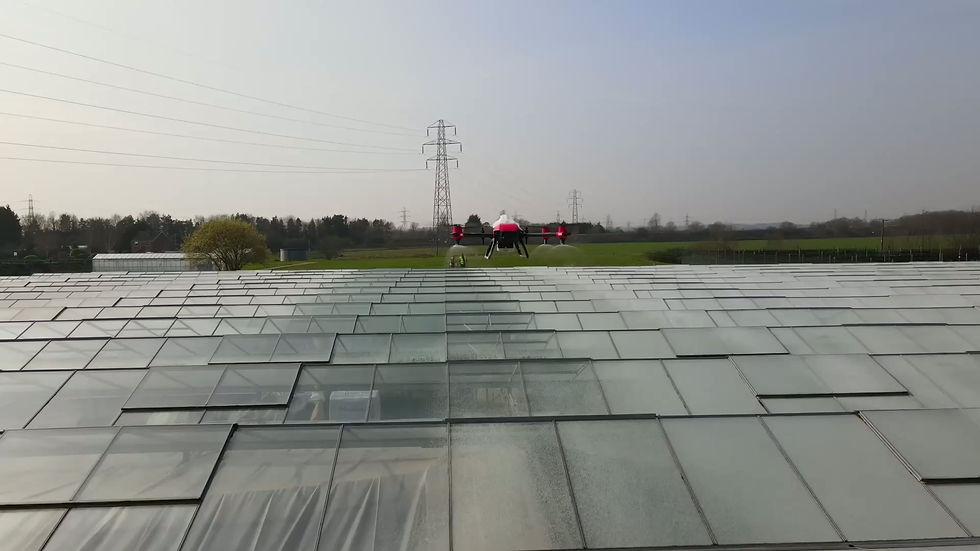
Horticulture, Glasshouse + Polytunnel
In modern commercial horticulture, accuracy and consistency are essential. From applying glasshouse shading treatments, polytunnel cleaning solutions and crop nutrition to distributing biological control products. Drone spraying provides an efficient, precise, and low-impact alternative to conventional methods. At Agrispray Drones, we collaborate with growers, glasshouse operators and agronomy specialists to deliver carefully targeted aerial applications using the XAG P100 Pro. This approach allows for rapid application, improved precision, and minimal interruption to crops, facilities, and day-to-day operations.
Common horticultural applications
-
Glasshouse Shading & Cleaning
Safely apply sun-protection coatings or cleaning agents evenly across glasshouses without scaffolding, delays or manual application. Ideal for large-scale operations. Cover up to 1 hectare per hour. Shading from a drone applied product such as RedUclear can offer a 5.5 degree C reduction in peak temperature fluctuation.
-
Biological Crop Protection
Apply natural products like DiPEL safely and effectively via drone. Drones offer a high-impact route for integrating biologicals into high-value and organic systems.
-
Light Management
Dirty roofs can reduce light transmission by 5–10%. Drone cleaning helps restore valuable crop-growing light. The general rule of thumb is 1% light loss from a glasshouse is the equivalent of losing 1% of crop yield. Regular cleaning can restore up to 10% of light transmission lost to accumulated dirt.
-
Reduced Costs
Drones as a service model lets grower avoid the £15000 - £40000+ capital outlay for hardware, training and insurance. Insurance companies will and do pay attention to glasshouse operations chosing safer and low impact solutions to cleaning and shading plans.
-
Precise Application
Through RTK guided flights with centimetre level accuracy, the altitude and positioning of our drone allows for truly uniform spraying, through consistent spray angle and no trigger happy moments from manual hoses. This can lead to up to 50% less product being used, which can save a fortune on costs when buying pallets of chemical or paint. Stable light distribution leads to a stable daily light integral across the whole canopy.
-
Contact Free Application
No structural damage to glass, gutters or frames. Some manual crews are known to damage the glass or the frame.
-
Polytunnel Cleaning
Cleaning a polytunnel roof regularly can significantly extend its usable life, especially in the UK where algae, dirt, bird droppings, and pollution reduce light transmission and accelerate degradation. Application from drones leads to a uniform and precise RTK guided spray, this can eliminate zebra striping or uneven sections.
Typical lifespan comparisons for polyethylene polytunnel covers:
-
Untreated / rarely cleaned: often around 4–6 years
-
Well-maintained and regularly cleaned with drones: commonly 7–10 years
-
Premium diffused or thermal films with excellent maintenance: sometimes 10–12 years
The main benefits come from:
-
Higher light transmission — dirt and algae can reduce light levels by 10–30%, which affects crop performance long before the plastic physically fails.
-
Reduced chemical and biological damage — organic buildup traps moisture and encourages moulds and biofilms that slowly weaken the surface.
-
Less overheating — dirty plastic absorbs more heat and stresses the polymer.
-
Earlier detection of wear — cleaning reveals cracks, UV damage, loose fixings, and abrasion before they become major tears.
For commercial growers, replacing old film can increase light levels enough to improve yields noticeably, so there is a balance between extending life and maintaining productivity.
Drone-based soft-wash cleaning systems are increasingly used because they reduce ladder work and avoid excessive pressure or physical contact with the film, which can itself damage ageing covers.
Working at Height Risks
Safety First: Keeps personnel on the ground, removing the need for ladders, scaffold towers, or roof-walking.
Inconsistent Results
Precision Coverage: Planned flight lines and XAG RTK technology ensure uniform shading and streak-free cleaning.
Labour-Intensive Access
Rapid Deployment: Covers large surface areas in hours rather than days, reducing reliance on expensive manual labour.
Operational Disruption
Minimal Intrusion: Drones operate from above with no need for scaffolding or extended site closures, maintaining production.


